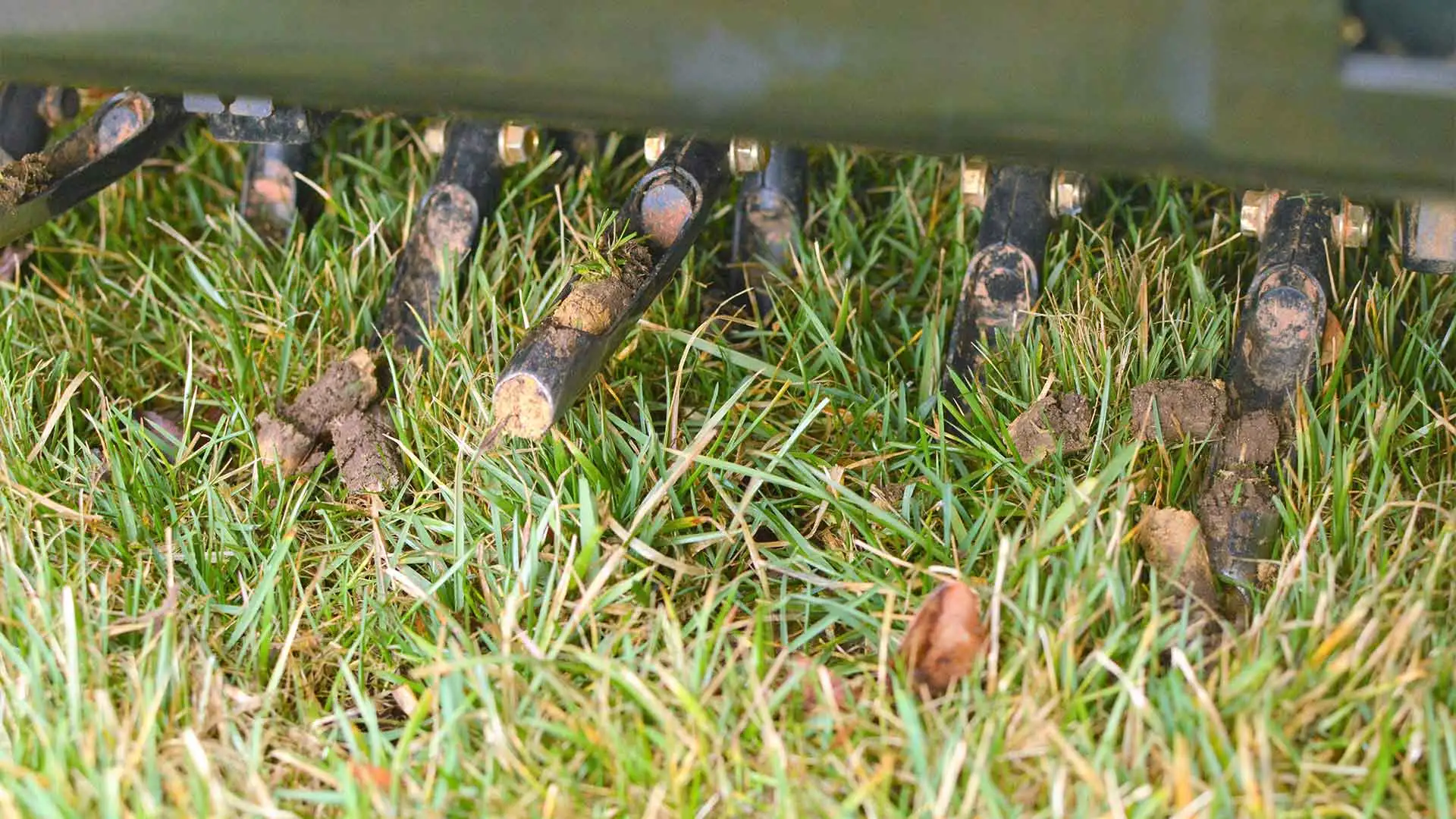
If your lawn feels spongy, looks thin in spots, or just doesn't respond to watering and fertilizer the way it should, compacted soil is probably the problem. Core aeration punches thousands of small holes in your turf, opening up the soil so air, water, and nutrients can actually reach the roots.
Pair that with overseeding and you're not just fixing what's broken. You're filling in bare spots with fresh grass seed for a thicker, healthier lawn heading into the next growing season.

Fall is the ideal time for aeration and overseeding in Indiana. Cool temperatures and fall rains create perfect conditions for seed germination.

We use a commercial-grade core aerator that pulls small plugs of soil out of your lawn. These cores break down naturally over a week or two. The holes left behind allow oxygen, water, and fertilizer to penetrate deep into the root zone instead of sitting on the surface.
Compaction happens naturally over time from foot traffic, mowing, and Indiana's clay-heavy soils. If you haven't aerated in the past year, your lawn is almost certainly compacted.
Right after aeration, we spread quality grass seed across your lawn. The aeration holes create perfect pockets for seed-to-soil contact, which is the single biggest factor in germination success. We use seed blends selected for central Indiana's climate: Kentucky Bluegrass, Perennial Ryegrass, and Tall Fescue varieties that thrive in our heat, cold, and everything in between.
We perform aeration and overseeding in the fall, typically September through mid-October in the Noblesville area. Fall gives new grass 6-8 weeks of cool, moist growing conditions before winter dormancy, then a full spring to establish before summer heat arrives.
You'll see soil cores on your lawn for about 1-2 weeks after aeration. That's normal. They'll break down with rain and mowing. New grass seedlings typically emerge within 10-14 days after overseeding, depending on weather conditions.
By the following spring, the overseeded areas will have filled in noticeably. Pair aeration with a fall fertilizer treatment for even faster results. The open soil channels let nutrients reach the roots directly.
Most lawns benefit from annual aeration. If your property gets heavy foot traffic or your soil is particularly clay-heavy, which is common throughout Noblesville, Carmel, and Fishers, annual aeration makes a significant difference in turf health.

Fall is the best time, typically September through mid-October in the Noblesville area. Cool temperatures and fall rains create ideal conditions for seed germination and root growth before winter dormancy.
Most lawns in Hamilton County benefit from annual aeration. Properties with heavy clay soil, high foot traffic, or compaction issues may benefit from twice-yearly treatments in spring and fall.
Yes. You can walk on your lawn immediately after aeration. The soil cores left on the surface will break down naturally within 1-2 weeks. We recommend avoiding heavy use for a few weeks after overseeding to give new grass the best chance to establish.
Yes. Aeration opens up channels in the soil that let fertilizer reach the root zone directly. Applying fertilizer after aeration significantly improves nutrient absorption. We recommend pairing aeration with our fall fertilization program.
Yes. We offer satellite-based instant pricing for aeration and overseeding. Visit our instant estimate page, enter your address, and get a price on screen immediately.
Our satellite pricing tool measures your lawn and gives you an exact aeration and overseeding price instantly. No phone calls, no site visit needed.