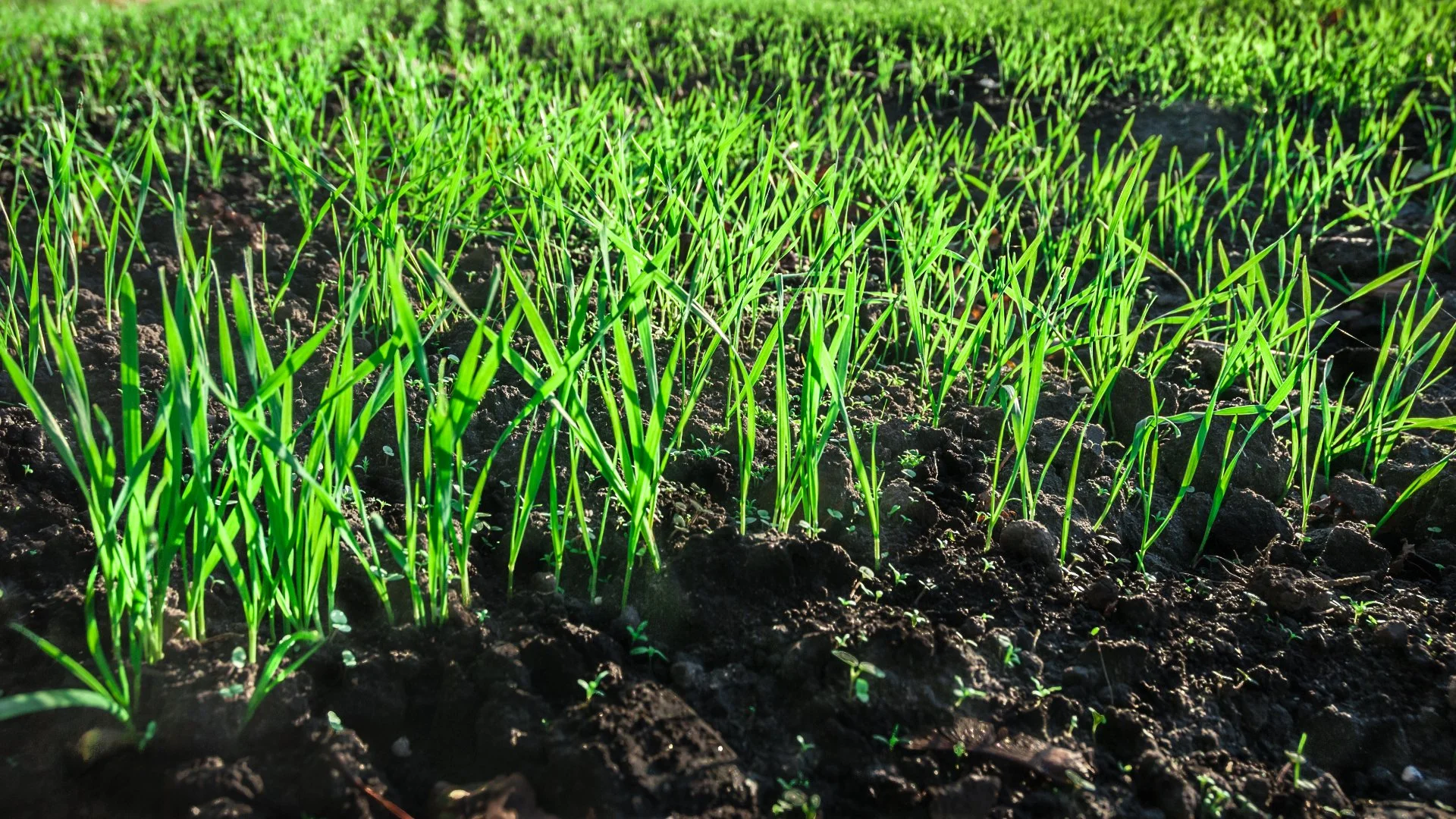
Maybe your builder left you with a thin excuse for a lawn that never filled in. Maybe you just finished a grading project, a pool installation, or a landscape renovation and you're staring at bare dirt. Whatever the reason, you need grass where there isn't any, and seeding is the most cost-effective way to get there.
New lawn seeding is different from overseeding an existing lawn. When you're starting from bare soil, the prep work matters more, the seed rate is higher, and the watering schedule during establishment is critical. We handle all of it: soil prep, seed selection, application, and guidance on aftercare so your new lawn actually takes.


Seed won't germinate on hard, compacted ground. We prepare the soil surface to create good seed-to-soil contact, which is the single biggest factor in germination success. For new construction sites where the topsoil was stripped during grading, we may recommend adding topsoil or soil amendments before seeding.
We use a blend of cool-season grasses suited for Hamilton County conditions: Kentucky Bluegrass for density and self-repair, Tall Fescue for drought tolerance and deep roots, and Perennial Ryegrass for fast germination and quick color. The exact blend depends on your property's sun exposure, soil type, and intended use.
We apply seed at the appropriate rate for new establishment (higher than overseeding rates) and provide you with a clear watering schedule. New seed needs consistent moisture to germinate, typically light watering two to three times per day for the first few weeks. We walk you through exactly what to do and when.
Late August through mid-October is the ideal seeding window in Indiana. Cool air temperatures reduce stress on young seedlings, warm soil promotes fast germination, and fall rains help with establishment. Spring seeding (April through mid-May) is possible but riskier, since the new grass has to survive its first summer before the root system is fully developed.
Choose seeding if: you're working within a tighter budget, you have the patience to wait 8 to 12 weeks for full establishment, and you want more control over the grass variety blend. Seeding costs significantly less per square foot than sod and produces a lawn with a deeper root system over time because the grass grows in place from the start.
Choose sod if: you need an instant lawn, the area is on a slope where seed would wash away before germinating, you're working on a timeline (selling a home, preparing for an event), or you simply don't want to manage the watering schedule that new seed requires.
Not sure which makes sense for your situation? Give us a call at (317) 900-7151 and we'll walk through the options with you. We do both.

Late August through mid-September is the ideal seeding window in Hamilton County. Soil temperatures are warm enough for quick germination, air temperatures are cooling, and fall rains help with establishment. Spring seeding (April–May) is a secondary option but competes with weed pressure and summer heat stress.
New lawn seeding starts from bare ground — we prepare the soil, grade it, and establish a lawn where none exists. Overseeding adds seed to an existing lawn to thicken thin areas without tearing up what’s already there. New seeding involves significantly more preparation including soil grading, starter fertilizer, and often straw or erosion blankets.
Seed is more cost-effective (roughly one-third the cost of sod) and offers more grass variety options, but takes 8–12 weeks to fill in. Sod gives instant results and can be installed in a wider weather window. For large areas in Hamilton County, seed is usually the practical choice. For small areas or slopes prone to erosion, sod is worth the premium.
You’ll see germination in 7–14 days depending on the grass type and weather. By 4–6 weeks, the lawn will have light green coverage. Full density typically takes 8–12 weeks. In Hamilton County, fall-seeded lawns look good before winter dormancy and really fill in the following spring. Consistent watering is the biggest factor.
New lawn seeding in Hamilton County typically costs $0.10 to $0.25 per square foot, including soil prep, seed, starter fertilizer, and straw cover. For a typical 5,000-square-foot lawn, that’s roughly $500 to $1,250. Compare that to sod at $1.00 to $2.00 per square foot installed.
Proper soil prep is the most important step. Remove debris and old vegetation, then grade the soil to establish drainage away from foundations. Loosen the top 4–6 inches and amend with compost — critical in Hamilton County’s heavy clay. A soil test determines if lime or other amendments are needed. Rake to a smooth, firm seedbed.
"I have been using Sprout for the last 5 years for my fall aeration and overseed and wouldn't change a thing! Faith and Gabe run a great business and I will continue to use them for years to come!"
Zach H.
Google Review
"I have been using them since about 2018. They have provided great service and always keep my lawn in great condition. I would recommend them to anyone."
Lauren M.
Google Review
Tell us about your property and we'll recommend the right approach. We serve residential and commercial properties across Noblesville, Carmel, Westfield, Fishers, Geist, and surrounding Hamilton County communities.