May 22, 2024 · Landscaping
You paid for a spring cleanup. The beds were edged, the mulch was fresh, and the borders between lawn and landscape looked razor-sharp. By August, those clean lines have softened into a blurry transition where the grass is creeping into the beds and the mulch is spilling onto the lawn. It happens every year, and there's a reason for it.
Why Edges Disappear
Grass grows sideways. Kentucky Bluegrass, the dominant grass in most Hamilton County lawns, spreads by underground rhizomes. Those rhizomes don't stop at the bed edge. They push into the mulch, send up new shoots, and gradually colonize the border of the bed. By midsummer, you've lost an inch or two of bed space to grass invasion on every side.
Mulch migrates. Rain, wind, foot traffic, and mowing blowback push mulch out of the bed and onto the lawn edge. As the mulch thins at the border, it exposes the soil where grass and weeds are happy to set up shop. The edge line gets blurry from both directions: grass coming in and mulch going out.
Mower drift. If the mowing crew isn't careful about wheel placement along bed edges, the mower gradually trims into the bed border over the course of a season, rounding off what was a clean 90-degree edge into a sloped transition. This is one of the things that separates careful mowing crews from careless ones.

How to Keep Them Sharp
Re-edge in spring, touch up in midsummer. The most effective approach is a deep recut during spring cleanup that reestablishes the full depth and angle of the edge, followed by a light maintenance pass in July or August to clean up any grass that's crept back in. Two edge sessions per season keeps things looking defined from April through November.
Edge depth matters. A proper landscape bed edge should be cut 2 to 3 inches deep, creating a vertical wall between the lawn and the bed. A shallow scrape along the surface looks OK for a week but doesn't stop rhizome invasion. The vertical cut severs the rhizomes and creates a physical barrier they have to regrow across.
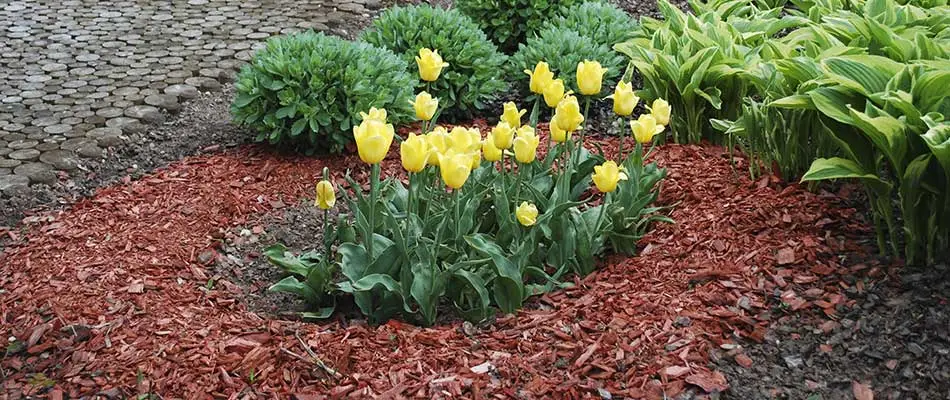
Mulch to the edge, not over it. When installing mulch, it should come right up to the edge but not pile over it onto the lawn. Mulch that spills over the edge invites the mower to scalp it, which pushes the edge line back. A clean 2 to 3 inch layer that stops at the vertical cut keeps everything in its lane.
Edging Materials: Do You Need Them?
Plastic or metal edging products are popular, but they're not required if the bed edge is properly maintained. A clean-cut natural edge (sometimes called a spade edge or trench edge) looks better than most edging products and is easier to maintain long-term. The plastic stuff heaves out of the ground during Hamilton County's freeze-thaw cycles, gets hit by mower blades, and often ends up looking worse than no edging at all.
That said, aluminum or steel edging (the thin, professional-grade kind, not the big-box plastic strips) can work well on properties where the bed borders curve or where grass pressure is especially aggressive. These hold a clean line and last for years without heaving. If you're doing a full bed renovation, it's worth considering.

The Maintenance Reality
Clean bed edges aren't a one-time job. They're an ongoing maintenance item, just like mowing or trimming. The properties that look sharp all season in Carmel, Noblesville, and Fishers aren't the ones with magic edging products. They're the ones where someone is re-edging at least twice a year and maintaining the mulch layer properly.
We handle bed edging as part of our spring cleanup, maintenance programs, and mulch installation services. Call (317) 900-7151 or request an estimate.