September 05, 2024 · Lawn Care
Most homeowners think spring is when lawn care matters most. The grass turns green, the mowers come out, and suddenly everyone is paying attention. But here's what we tell every customer across Noblesville, Carmel, Westfield, and Fishers: by the time spring arrives, the work that actually determines how your lawn performs all year has already been done. Or it hasn't. That work happens in fall.
Cool-Season Grasses Do Their Best Work in Fall
The grasses in Hamilton County lawns, Kentucky Bluegrass, Tall Fescue, Perennial Ryegrass, and Fine Fescue, are all cool-season varieties. They hit their peak growth period when daytime temperatures are in the 60s and 70s and nighttime temps drop into the 50s. In central Indiana, that's September and October.
During this window, grass plants shift their energy from blade growth to root development. The roots push deeper into the soil, storing carbohydrates that carry the plant through winter dormancy and fuel the fast spring green-up everyone looks forward to. A lawn that enters winter with a deep, well-fed root system comes back thick and strong. A lawn that enters winter stressed and shallow comes back thin, slow, and full of bare spots that weeds are happy to fill.
This is why the work you do (or don't do) in September through November has more impact on next year's lawn than anything you do in April.

Aeration and Overseeding: Fall's Power Move
Core aeration and overseeding is the single most impactful thing you can do for an Indiana lawn, and it only works well in fall. By the end of summer, Hamilton County's clay-heavy soil is compacted hard from months of mowing, foot traffic, and the weight of the clay itself. Water sits on the surface instead of soaking in. Fertilizer can't reach the root zone. The grass suffocates from below.
Aeration punches thousands of small holes through that compacted layer, opening the soil so water, air, and nutrients can reach the roots again. Overseeding at the same time drops fresh grass seed into those holes where it has perfect seed-to-soil contact for germination. Warm soil, cool air, and fall rains handle most of the watering for you. By the following spring, every thin spot has filled in and the overall turf density is noticeably thicker.
You can't do this effectively in spring because pre-emergent weed control (which you need to stop crabgrass) creates a barrier in the soil that blocks grass seed germination too. In fall, there's no conflict. Crabgrass is dying, annual weeds are done for the year, and conditions are ideal for new grass.
Winterizer Fertilizer Builds the Reserves
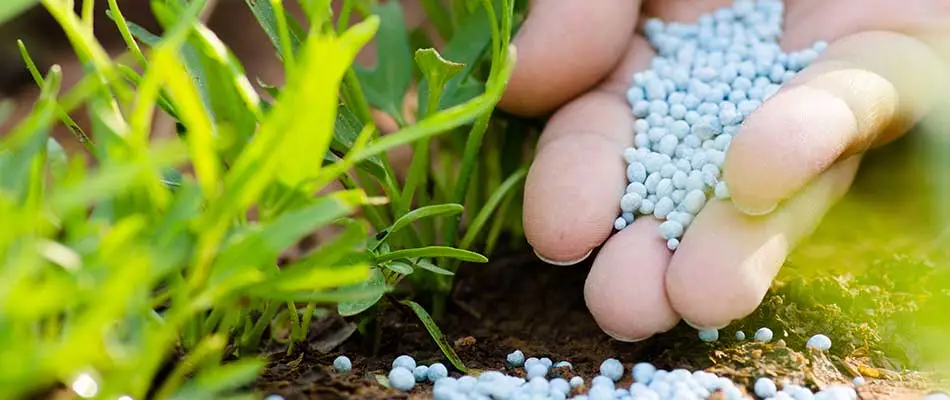
The last fertilizer application of the year goes down in late October or early November. This winterizer blend is higher in potassium, which strengthens cell walls and encourages the grass to store carbohydrates in the root system. Those stored reserves are what fuel the rapid green-up in spring.
Skip the winterizer and your lawn enters dormancy underfed. It wakes up slowly in spring, comes back thinner, and gives weeds like crabgrass and dandelions a window to get established before the grass catches up. The winterizer closes that window.
Leaf Removal Protects Everything You've Built
All the aeration, overseeding, and fertilization in the world won't matter if you let inches of leaves smother the lawn through winter. This is especially relevant in Noblesville neighborhoods near Forest Park, the established Carmel communities with mature hardwoods, and lakefront properties in CiceroGeist where the tree canopy is dense.
Leaf removal isn't cosmetic. Matted leaves block the last critical weeks of photosynthesis before dormancy, trap moisture that causes snow mold and other fungal diseases, and can kill entire sections of turf if left until spring. Removing them in passes as they fall (not waiting until every tree is bare) keeps the lawn uncovered during its most important growth phase.

The Fall Checklist, In Order
September: Aerate and overseed while the soil is still warm enough for germination. Early October: Final fall fertilizer application to feed the grass during its peak root growth. Late October/Early November: Winterizer fertilizer to build root reserves. Throughout October and November: Leaf removal in multiple passes. November: Fall cleanup to clear beds, cut back perennials, and prep the property for winter. Final mow at a slightly lower height (around 3 inches) to reduce snow mold risk.
If you'd rather have us handle all of this, we serve Noblesville, Carmel, Westfield, Fishers, and the rest of Hamilton County. Call (317) 900-7151 or get instant pricing online.