June 20, 2024 · Mulch & Rock
Every spring, the same question comes up: should I mulch my beds or switch to rock? Both have their place, and the right answer depends on your property, your budget, and how much maintenance you're willing to do. Here's an honest comparison from a crew that installs both every week across Hamilton County.
Mulch: the Pros and Cons
What mulch does well. Fresh mulch looks great immediately. It retains soil moisture during Indiana's dry summer stretches, which means less watering for your plants. It regulates soil temperature, keeping roots cooler in July and insulated in January. As it decomposes, it adds organic matter back into the soil, which improves soil structure over time. And it suppresses weeds by blocking sunlight from reaching weed seeds.
The downside. Mulch breaks down. You'll need to refresh it every year, typically in April or May, to maintain a 2 to 3 inch layer. Dyed mulch (black, brown, or red) holds its color for a full season, but by the following spring it's faded and thinned out. Shredded hardwood fades faster but adds more organic matter to the soil. Either way, mulch is an annual expense.

Rock: the Pros and Cons
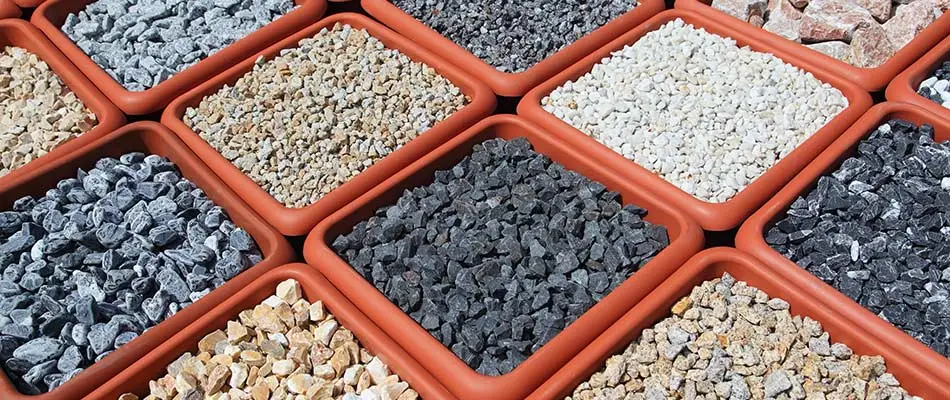
What rock does well. Rock doesn't decompose. River rock, lava rock, and other decorative stone options last for years without replacement. That makes rock a lower-maintenance option for beds where you don't want to think about ground cover every spring. Rock also works well in drainage areas, around foundations, and in beds where you want a clean, permanent look.
The downside. Rock doesn't add nutrients to the soil, and it doesn't retain moisture the way mulch does. In fact, rock beds can actually heat up the soil surface in summer, which stresses some plants. Leaves, grass clippings, and debris that land in rock beds are harder to clean out than from mulch beds. And weeds still grow in rock. Seeds settle in the dust and organic matter that accumulates between stones, and pulling weeds from a rock bed is more annoying than pulling them from mulch. The upfront cost is also higher than mulch, though you recover that over several years by not replacing it annually.

So Which Should You Choose?
Choose mulch if: your beds have plants that benefit from moisture retention and soil nutrition (most shrubs, perennials, and trees), you want the freshest look every spring, or you're on a tighter upfront budget. Most residential landscape beds in Noblesville, Carmel, Westfield, and Fishers use mulch because it's better for plant health and easier to maintain around living material.
Choose rock if: the bed has no plants or only drought-tolerant species, you want a permanent ground cover you don't have to refresh annually, the area is a drainage zone or a spot where mulch would wash away, or you prefer the aesthetic of stone. Rock works especially well along foundations, around AC units, and in xeriscape-style beds.
Mix both. Many of our customers use mulch in their main planting beds and rock in accent areas, drainage spots, and foundation borders. There's no rule that says it has to be one or the other across the whole property.
We Install Both
Sprout Lawn & Landscape supplies, delivers, and installs mulch and decorative rock for residential and commercial properties across Hamilton County. We'll help you decide what fits your property and your budget. Call (317) 900-7151 or request an estimate online.