July 05, 2024 · Landscaping
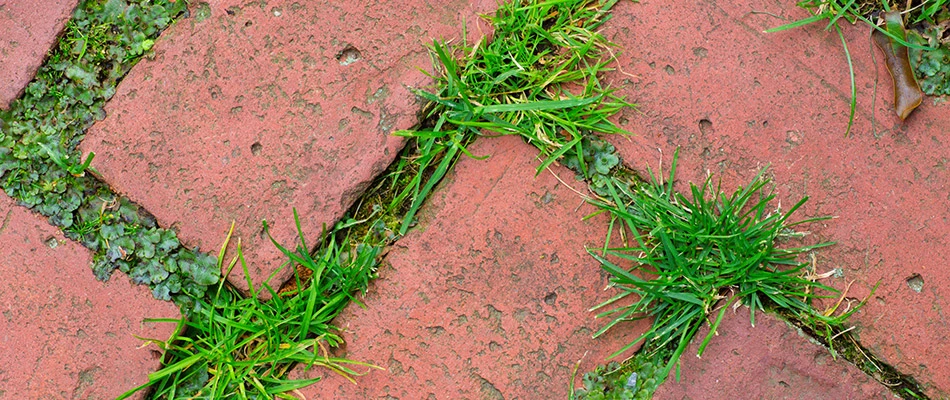
You invested in a beautiful paver patio and two summers later there's grass, clover, and dandelions pushing up through every joint. It looks terrible, it's frustrating, and pulling them out by hand is a losing battle because they grow back within weeks. Here's why it happens and how to actually fix it.
Why Weeds Grow in Paver Joints
Weeds don't grow up through the paver base (if the base was installed properly, there's 6 to 8 inches of compacted gravel underneath that nothing can penetrate). They grow in the joint material between the pavers. Over time, regular joint sand erodes from rain, foot traffic, and settling. As it washes out, organic matter (decomposed leaves, soil dust, pollen, grass clippings) fills in the gaps. That thin layer of organic material is all a weed seed needs to germinate.
Once a weed establishes a root in the joint, pulling the top off just leaves the root behind to regrow. That's why hand-pulling feels pointless. You're pruning the weeds, not removing them.

The Real Fix: Polymeric Sand
Polymeric sand is the long-term solution. It looks like regular joint sand but contains a polymer binder that hardens when wet, creating a semi-rigid joint that resists erosion, weed germination, and insect activity. When properly installed, polymeric sand stays in the joints for years instead of washing out after the first heavy rain.
The process: we remove any existing weeds from the joints (roots and all, not just the tops), clean out the old sand, sweep new polymeric sand into the joints, compact it, mist it with water to activate the binder, and let it cure. Once set, the joints are sealed against weed seeds and resistant to ant colonies that love to nest in paver joints.
If your patio was originally installed with regular sand (which many are), retrofitting with polymeric sand is one of the best maintenance investments you can make. It transforms a weedy, ant-infested patio back to its original clean look and keeps it that way.
Preventive Maintenance
Keep the surface clean. Leaf litter, grass clippings, and organic debris that accumulate on the patio decompose into the joints and create the soil layer weeds need. Regular sweeping or blowing, especially in fall when leaves pile up, prevents this buildup. This is something we handle as part of fall cleanups and spring cleanups for customers who have paver surfaces on their property.
Seal the pavers. A quality paver sealer protects the surface and the joints from moisture penetration, UV fade, and organic staining. It also makes the polymeric sand last longer by reducing water erosion. Resealing every 2 to 3 years keeps the patio looking fresh and the joints intact.

Address drainage issues. If water pools on or around the patio after rain, it's washing joint sand out faster than normal. Grading corrections or adding a drainage channel can fix this. Standing water also promotes moss and algae growth on the paver surface, which makes everything slippery and accelerates deterioration.
What About Herbicide?
Post-emergent herbicide can knock down existing weeds in paver joints, but it's a temporary fix if you don't address the underlying cause (eroded joint sand and organic buildup). Pre-emergent weed control can be applied to paver surfaces to prevent seed germination in the joints, and it works well as a supplement to polymeric sand. But herbicide alone without fixing the joints is like mowing weeds instead of pulling them. It buys you time but doesn't solve the problem.
We Install and Maintain Paver Surfaces
Sprout Lawn & Landscape installs paver patios, walkways, and driveways with proper base prep and polymeric sand from day one. For existing patios that need joint restoration, we handle the cleanup, re-sanding, and sealing to bring them back to like-new condition. We serve Noblesville, Carmel, Westfield, Fishers, and surrounding Hamilton County communities. Call (317) 900-7151.